
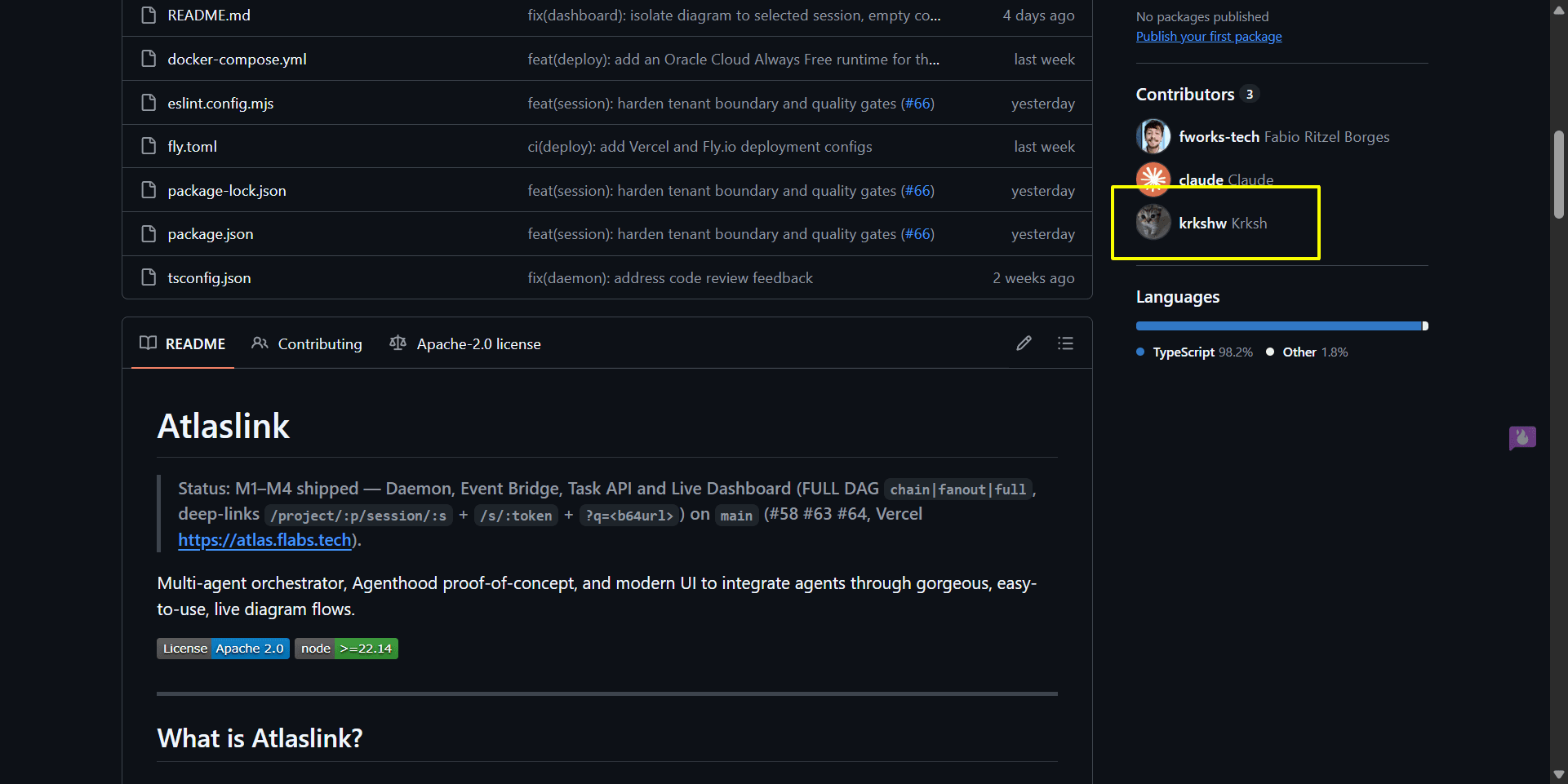
A teammate pings you: "Who is krkshw? Why does our repo list Claude as a contributor?" The screenshot shows Contributors 3 — fworks-tech, claude, krkshw — on a repository you have touched alone for weeks. It feels like a permission leak.
It isn't. It's how GitHub counts contributors — and every team that uses push --force and AI coding agents will see it sooner or later.
We hit this on atlaslink, branch fix/issue-7-isolate-session-diagram. The web pill said 3 avatars, GET /repos/.../contributors said 1, and git log --all agreed with the API. Here are the six things to know, the troubleshooting table we now keep, and the one-command proof that settles it.
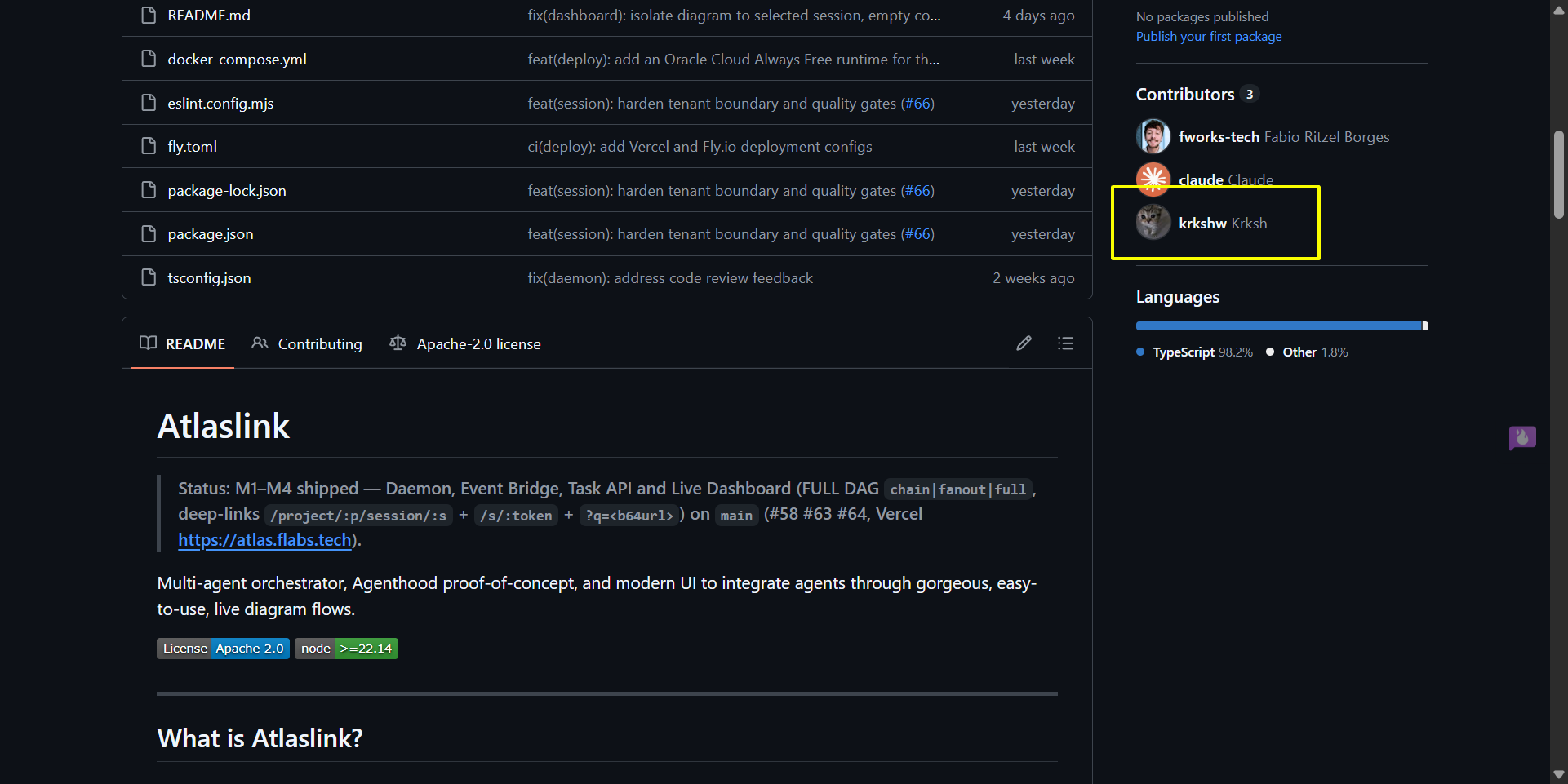
The sidebar that started it — 3 avatars while we expected 1. The highlighted @krkshw (Krksh, public profile, kitten avatar, bio "i'am @krkshs") had never committed to main.
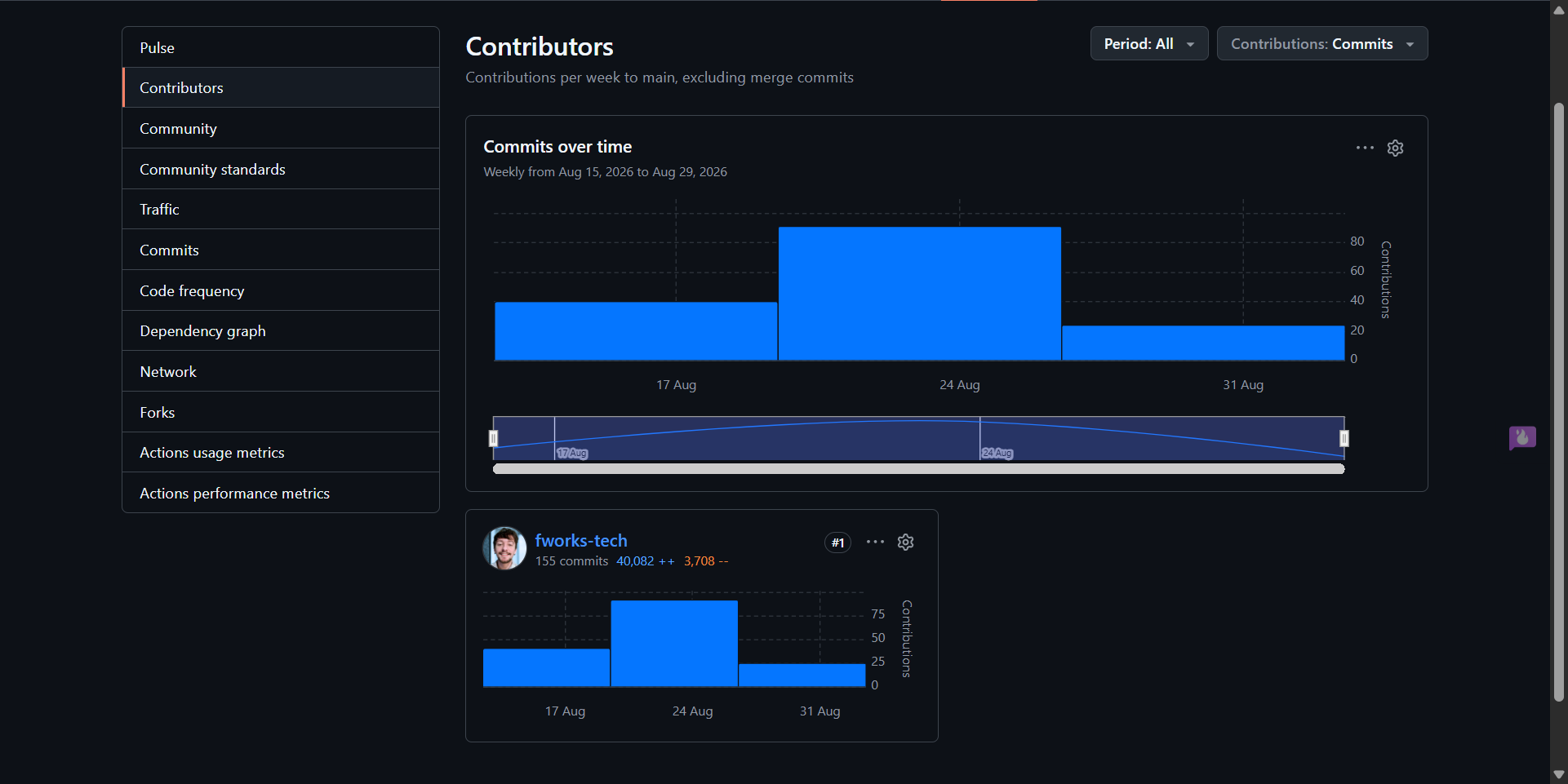
Insights tells the truth: fworks-tech — 155 commits, 40,082 ++, 3,708 -- — is the sole contributor on main (Period: All, Contributions: Commits). Same API that returned [{login: "fworks-tech"}] while the pill showed 3. The divergence is the clue.
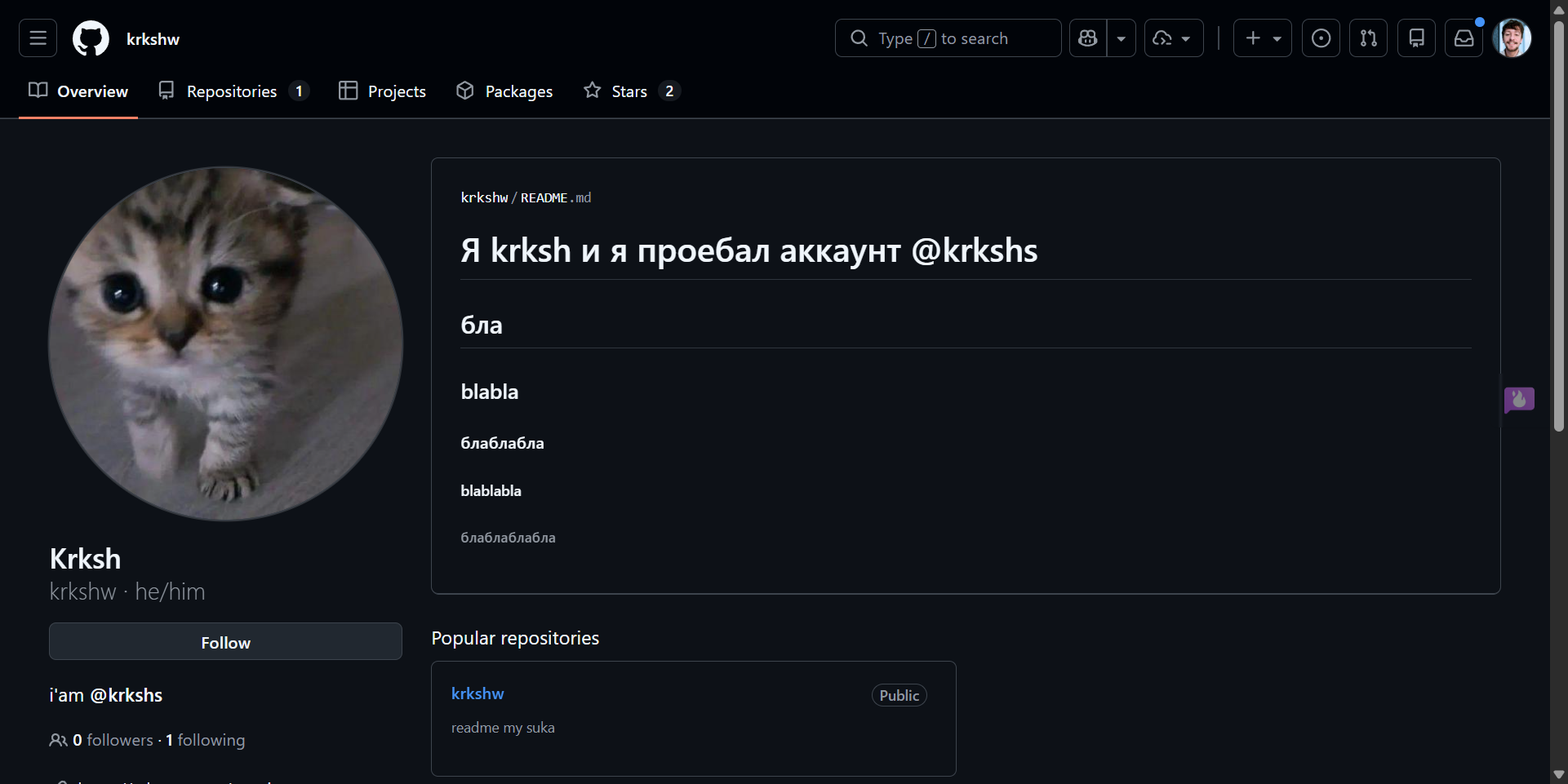
The ghost: public profile @krkshw — not a collaborator, not in git log, but cached in the pill from an orphaned push. Public info, no private data — we link it so you can see what a ghost looks like in the wild.
What GitHub actually counts
A contributor is not "someone with push access." It's "an author email GitHub has seen on a commit object it retains."
Think of it like a guest list at a venue:
- Naive: "Contributors =
git shortlog -snonmain." - Effective: "Contributors pill =
git log --allover GitHub's retained graph — including deleted and force-pushed orphans — whileapi/contributors=git log mainonly."
The second version explains why two official GitHub surfaces disagree. The pill is for discovery — it aggregates every author ever pushed to any ref, including branches you deleted. The API is for attribution — it walks the default branch history after deduplication. The git log you get after a fresh clone is the canonical graph: what is reachable now.
What makes ghosts appear is a small AI-specific detail: agents like Claude Code, Cursor, and Agenthood create commits as claude[bot] or co-authored-by trailers that get squashed away. The commit disappears from main, but not from GitHub's orphan retention.
The six moves that surface ghosts
1. Two graphs, not one
GitHub runs two contributor graphs with different caches. Treat the pill and the API as different endpoints, not two views of the same data.
GET /repos/fworks-tech/atlaslink/contributors→[{ "login": "fworks-tech", "contributions": 164 }]
Versus:
Web pill →
fworks-tech · claude · krkshw(3 avatars)
The API is Cache-Control: public, max-age=60 and recomputes hourly from main. The pill recomputes daily from every ref ever pushed plus co-authors. For an audit, trust the API and a fresh clone — never the pill.
2. Force-push orphans ghosts
A force-push does not delete a commit on the server. It orphans it.
git push --force origin fix/issue-7-isolate-session-diagram→dde860e(now) wasabc123(byclaude[bot]) a minute ago
Versus:
git log --all --oneline→ onlydde860eis reachable;abc123is gone from your clone
GitHub retains orphans for ~90 days for the PR timeline and the contributors graph, even though you can no longer fetch them. This is exactly what happened on fix/issue-7-isolate-session-diagram — an earlier iteration contained a bot-authored commit that was force-pushed to dde860e before the merge. Pill = 3, API = 1. One git push --force is a ghost factory.
3. Co-authors are not contributors
GitHub surfaces Co-authored-by: trailers in the PR timeline and sometimes in the pill, but never in api/contributors, which counts commit.author.email only.
Author: Fabio <...@users.noreply.github.com>+Co-authored-by: Claude <noreply@anthropic.com>→ pill may showclaude, API will not
Versus:
Author: Claude <...>→ both surfaces count it
If your agent workflow adds Co-authored-by: claude on every AI-assisted commit and you squash-merge, expect a transient ghost that fades after the next graph recompute.
4. Author vs committer matters
Every commit has two identities. The web-flow merge user GitHub <noreply@github.com> is a committer, not an author.
git log --pretty=fuller→Author: Fabio RItzel Borges+Commit: GitHub <noreply@github.com>(merge #64, #66)
The commit shows up in GET /commits?anon=1 but stats/contributors credits the author only. AI commits often mismatch the two — author=claude[bot], committer=fworks-tech — which is why claude can appear in commits but not in stats.
5. Rebuild the graph yourself
When the pill lies, ask git and the API for the truth. One command proves it:
git log --all --pretty="%an <%ae> | %cn <%ce>" | sort -ucurl -s https://api.github.com/repos/fworks-tech/atlaslink/contributors | jq '.[].login'curl -s https://api.github.com/repos/fworks-tech/atlaslink/stats/contributors | jq '.[].author.login'
If the first two diverge, it's an orphan or cache — not a permission leak. On atlaslink all three converged to fworks-tech after we compared them. If they had shown krkshw, you would have a concrete SHA to purge.
6. Define who should appear
Tell git whose name to commit under, not just what to commit. A team policy removes most ghosts before they form.
git config user.name "Fabio Ritzel Borges"+git config user.email "38725315+fworks-tech@users.noreply.github.com"
Versus the same repo without the config — your OS username or an agent default like krkshw becomes the author. Define the taxonomy you want:
- Human or bot —
fworks-techvsclaude[bot] - Squash or keep — squash-merge hides co-authors, rebase keeps them
- Author or co-author —
--authorrewrites,Co-authored-byappends - Lease or force —
--force-with-leasevs--force
The policy isn't bureaucracy. It's the constraint that tells GitHub whose avatar belongs on the graph.
Troubleshooting: when the pill lies
Even when you know the two graphs, you'll still stare at a pill that doesn't match. Resist the urge to revoke access immediately. Apply a targeted fix:
| Symptom | Fix |
|---|---|
Pill shows more avatars than api/contributors | Compare api/contributors vs git log --all; trust log |
| New avatar right after a force-push | Check gh api repos/.../events --jq 'select(.payload.forced)' for orphan |
claude appears once then disappears | Orphan GC: wait 24h–30d, pill converges; re-push without bot author if urgent |
web-flow in commits but not contributors | Merge via CLI instead of web UI; web-flow never counts as contributor |
stats/contributors is empty {} | Stats recompute hourly; retry with If-None-Match or wait for next window |
Teammate krkshw never committed but shows | Search PR timeline for Co-authored-by: krkshw on orphaned push |
| Need audit proof for security | Run git log --all --pretty=fuller + gh api .../commits?anon=1 and screenshot both |
One targeted check beats five theories. Change one variable at a time — force-push vs co-author vs author — and you'll learn which graph lied.
Common successful patterns
Across every incident we've debugged, the same checks recur:
- A canonical graph. A fresh
git clone+git log --all— the source of truth. - An API graph.
GET /contributors+GET /stats/contributors— default-branch attribution. - An event graph.
GET /repos/.../eventsandPushEvent.forced— orphan proof. - A UI graph. The Contributors pill — discovery, eventual-consistent, never for audit.
If you have those four, you're already debugging better than most teams. Format them however you like — a table, a timeline, or a checklist. The point is you checked all four before concluding "breach" vs "ghost."
The secret weapon: ask git for the orphans
When a pill still feels wrong, there's a shortcut most teams miss: ask the server for the orphans.
git fsck --lost-foundlocally;gh api repos/fworks-tech/atlaslink/commits --paginate+GET /repos/.../eventsas the server-side reflog
Then paste the SHA that only the server sees and compare authors. This turns ghost-hunting from a guessing game into a diff, and it teaches you which push created the ghost in the first place.
It's also the honest description of how we wrote this post: we showed the pill to an AI, asked it to critique the two-graph hypothesis, hit fsck and the Events API to confirm the orphan, refined, repeat.
If you want prevention over forensics, swap --force for --force-with-lease — it blocks the overwrite that orphans the ghost — and set Settings > Branches > Protect main > Require PR so even a leaked token can't force-push ghosts into the graph. Squash-merge policy and explicit git commit --author for bots do the rest.
Ghosts are iterative
The most important takeaway: ghosts fade. API cache 60s, stats hourly, pill daily, orphan retention 90 days. What looks like a leak today converges to one contributor tomorrow with no action — which is exactly what atlaslink did: pill 3 → API 1 → pill 1.
Rarely does the first check explain the whole avatar. You clone the graph, hit the API, check the events, notice the force-push flag, swap the force for a lease, and suddenly the graph makes sense.
None of the six moves is complicated. Combined, they turn a spooky screenshot into a routine triage.
Clone the graph. Hit the API. Check the events. Don't trust the pill. Then teach the bot whose name to commit under — and refine.
Debugged on atlaslink — the multi-agent orchestrator we ship at fworks-tech, where every agent's commit is traceable before it hits main.